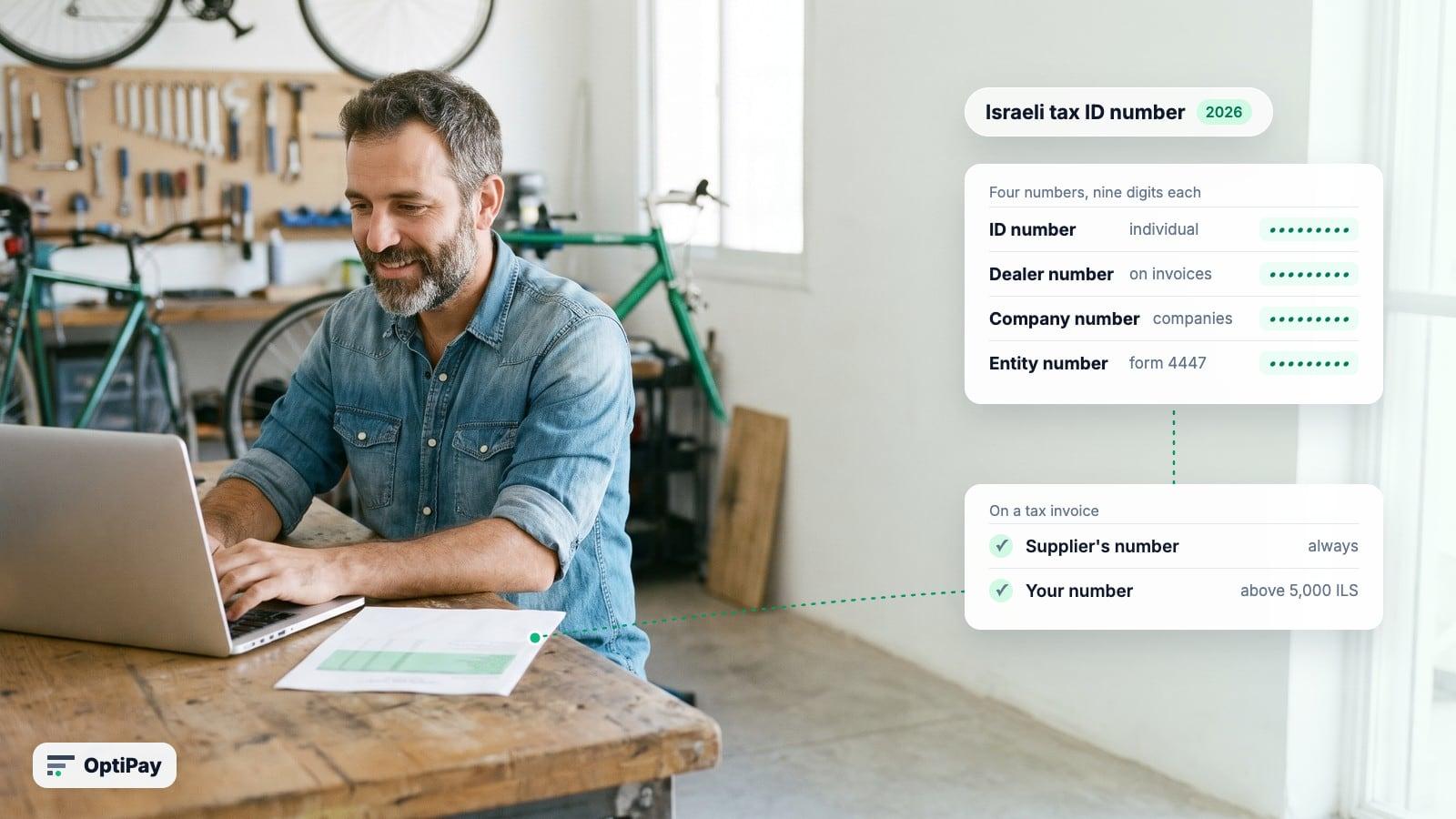
An Israeli tax identification number (TIN) is a nine-digit number. For an individual it is the Israeli ID number (teudat zehut). For a company it is the company number issued by the Companies Registrar. Israel has no separate VAT number: the same nine digits appear on an invoice as the supplier's dealer number (mispar osek). Foreign residents without an Israeli ID get an entity number on form 4447.
Most English pages on this question are written for someone filling in a foreign bank form, and they stop once they have said "it is the ID number". This guide is for the business that deals with Israeli invoices. You will see four kinds of numbers on them, and only some of them affect the VAT you can reclaim. You need to know which number belongs where, how to tell a valid one from a typo, and what to do when a supplier gets it wrong.
The four numbers you will see on Israeli documents
| Number | Hebrew | Who has it | Where you see it |
|---|---|---|---|
| ID number | Teudat zehut (ת.ז.) | Every Israeli resident | An individual's tax file. Usually also their dealer number |
| Dealer number | Mispar osek (ע.מ.) | A business registered for VAT | Every invoice the business issues |
| Company number | Mispar chevra (ח.פ.) | A company, from the Companies Registrar | The company's invoices, where it serves as its dealer number |
| Entity number | Mispar yeshut | A foreign resident with no Israeli ID | Tax Authority correspondence, form 4447 |
The Israel Tax Authority's TIN sheet for the OECD puts it in two lines: an individual's TIN is their ID number, and a company's TIN is nine digits with no special meaning. Both are issued automatically to every resident.
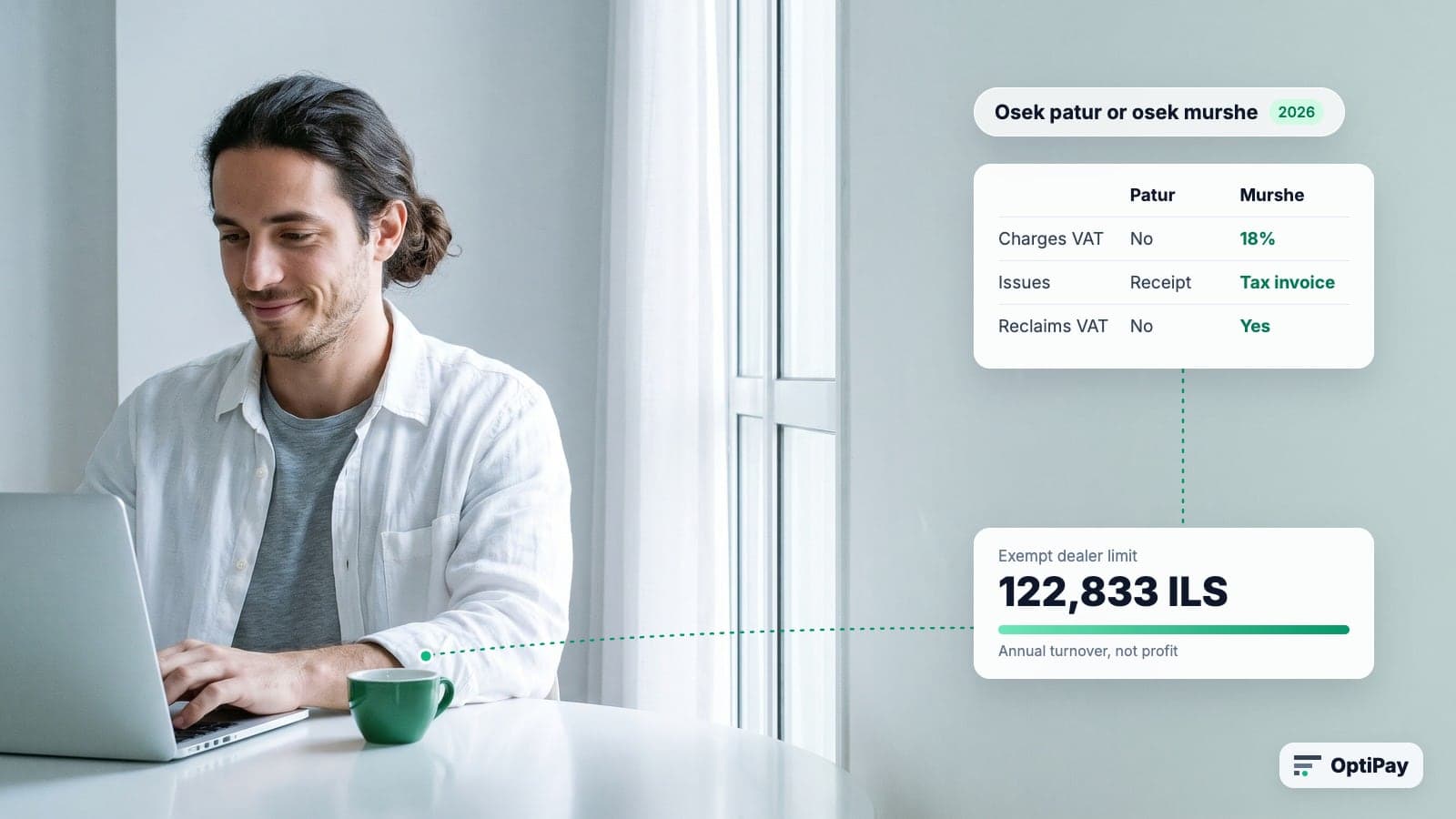
For a sole trader, the ID number and the dealer number are usually the same nine digits. A self-employed person who registers as an osek murshe or an osek patur is registered under their ID number. The difference between those two statuses, and why only one of them can issue a tax invoice, is in Osek Patur or Osek Murshe.
Which number goes on an invoice
The Income Tax bookkeeping instructions, which the VAT regulations apply to VAT as well, set out what every invoice must carry. Section 9 requires the seller's name and address and one identifying number, all printed. The number can be:
- the ID number,
- the company number at the Companies Registrar,
- the cooperative society number, or
- the registration number as a dealer for VAT.
A tax invoice from a licensed dealer carries its dealer number. For an individual, that is the ID number. For a company, it is the company number.
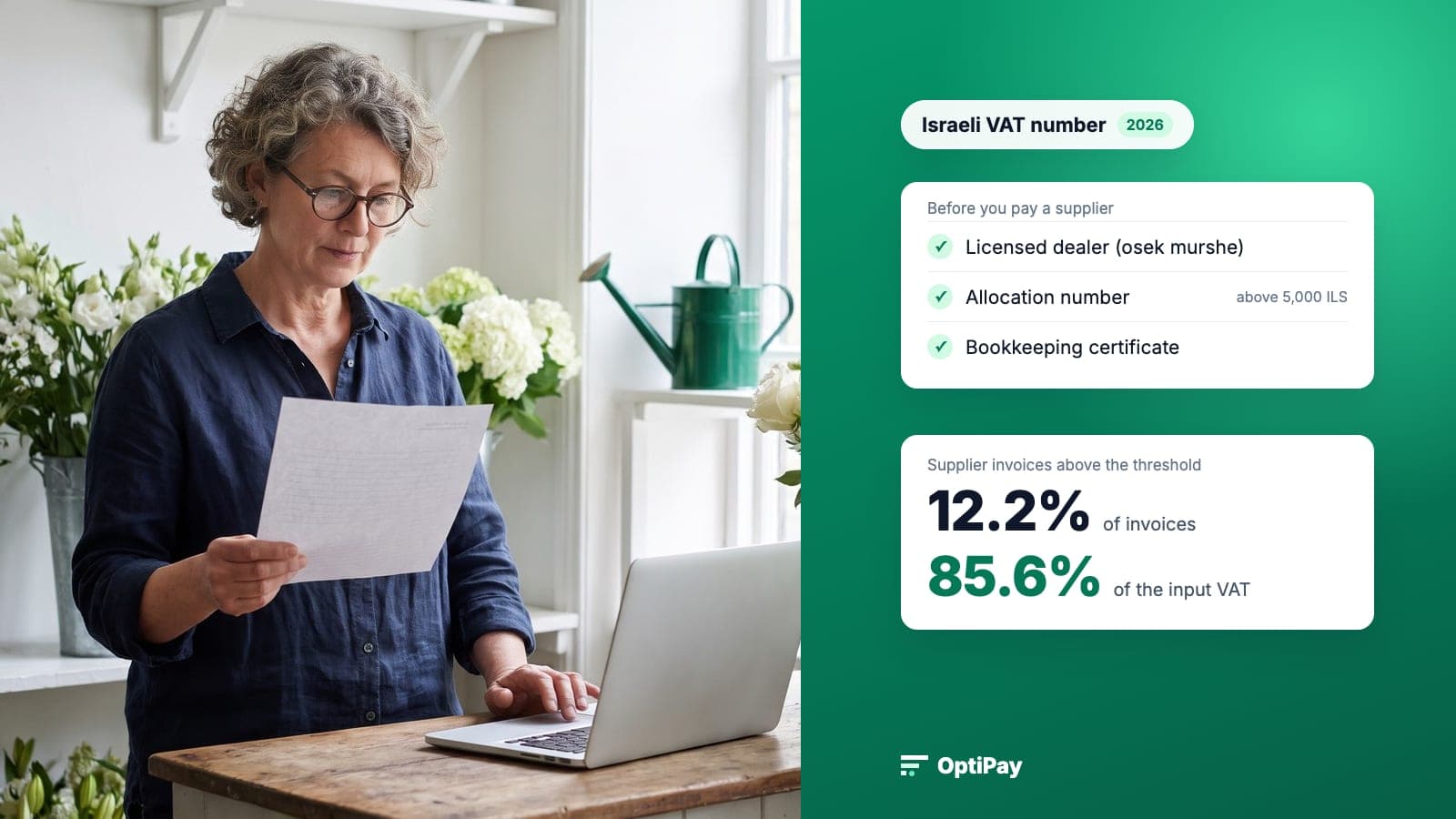
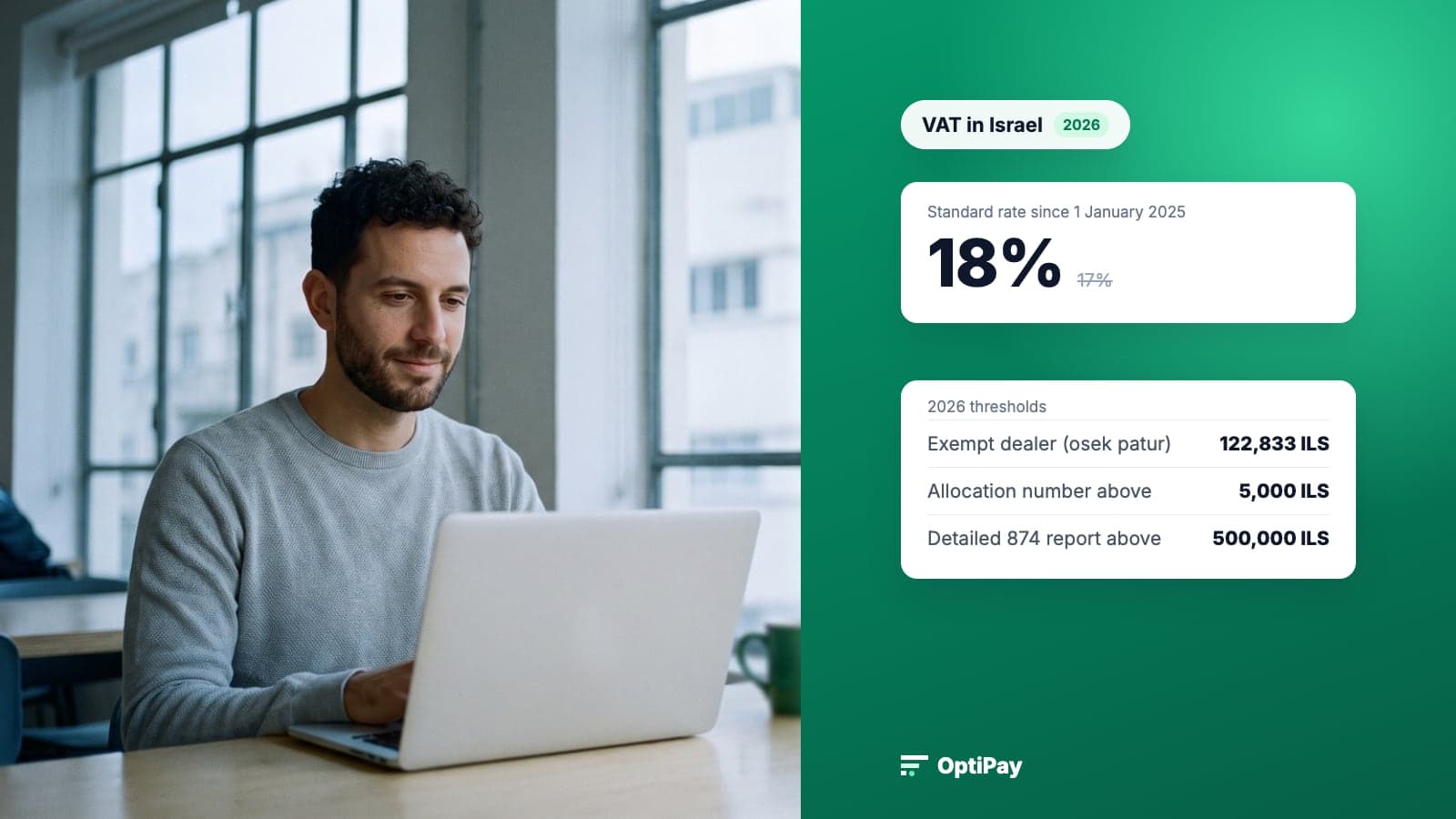
Your own number matters too. On every tax invoice above the allocation threshold (5,000 ILS before VAT from 1 June 2026), the supplier asks the Tax Authority for an allocation number. According to the Tax Authority's Israel Invoices FAQ, the request includes the customer's licensed dealer number, and a number is allocated only when the invoice data is valid, including the customer's check digit. When you verify the allocation number, the service shows you only the invoices a supplier issued to your number. An invoice issued under someone else's number will not show up for you to check.
How to tell a valid number from a typo
- Count the digits. Israeli ID, dealer and company numbers are nine digits.
- The last digit is a check digit. It is calculated from the other eight, so a mistyped digit almost always produces an invalid number. The Tax Authority's own systems reject an invalid check digit, which is why a supplier with a typo in your number cannot get an allocation number for your invoice.
- Match it to the name. A valid number can still belong to someone else. The Tax Authority's dealer-details service shows the business name and status behind a dealer number. How to run that check is in How to Check an Israeli VAT Number.
When the number is wrong or missing
Under section 38 of the VAT Law, you can deduct input VAT only from a tax invoice "issued to him lawfully". An invoice with the wrong supplier number, or one above the threshold issued to the wrong customer number, is not something to put in your VAT report as it stands.
| What is wrong | What to do |
|---|---|
| The supplier's number is missing or has a typo | Ask for a credit note and a corrected invoice. A credit note never needs an allocation number |
| Your number is wrong on an invoice above the threshold | Same fix. The allocation number belongs to the number the supplier entered, not to you |
| The invoice is in someone else's name (for example a phone or electricity bill in a partner's name) | Under regulation 12C of the VAT regulations, the VAT Director may recognise it for phone, water, gas, electricity and similar expenses, if you show the expense served your business. Ask your accountant before claiming it |
| The number belongs to an osek patur | There is no VAT to reclaim. An osek patur cannot issue a tax invoice |
Keep the VAT out of the report until the corrected invoice arrives. You normally have six months from the invoice date to claim it, so a correction requested the week the invoice arrives costs nothing. One found at year end may cost the VAT.
A tax ID for foreign forms and foreign residents
Israelis filling in a foreign form. A bank, broker or platform abroad that asks for your Israeli TIN for FATCA or CRS reporting wants your nine-digit ID number. For a company, it wants the company number. There is no separate "tax ID" to request.
Foreign residents. A foreign resident who has a foreign passport and no Israeli ID number, and needs to be registered with the Tax Authority, applies for an entity number on form 4447. It is filed manually with a copy of a valid passport, and the service is free. A foreign business that trades in Israel and has to register for VAT must also name a representative in Israel, under regulation 6 of the VAT registration regulations. That is a step to take with an Israeli accountant.
How OptiPay catches a missing or invalid number
OptiPay collects supplier invoices from Gmail, Outlook and WhatsApp and reads each one with AI, including the supplier's dealer number and the allocation number. When a tax invoice has no valid supplier number, or an invoice above the threshold has no allocation number, the report for your accountant flags it as blocking the VAT deduction. You see the problem while there is still time to ask the supplier for a corrected invoice, not when the report is due. More on which invoices count in our guide to VAT in Israel.
Frequently asked questions
What is my tax identification number (TIN) in Israel?
For an individual it is the nine-digit Israeli ID number (teudat zehut). For a company it is the nine-digit company number issued by the Companies Registrar. That is what the Israel Tax Authority tells the OECD, and it is the number to enter on a foreign bank or FATCA form that asks for an Israeli TIN.
Is the Israeli VAT number the same as the tax ID?
In practice, yes. Israel has no separate VAT number format. A self-employed individual is usually registered for VAT under their ID number, and a company under its company number. On an invoice that number appears as the dealer number (mispar osek).
Which number must appear on an invoice in Israel?
The seller's name, address and one identifying number, printed: the ID number, the company number, the cooperative society number or the VAT registration number. On a tax invoice above the allocation threshold, the buyer's licensed dealer number matters too, because the supplier uses it to request the allocation number.
What if a supplier's invoice has the wrong number?
Do not reclaim the VAT on it yet. Ask the supplier to cancel it with a credit note and issue a corrected invoice. A credit note never needs an allocation number. Input VAT can only be deducted from a tax invoice issued lawfully, and a claim normally has to be made within six months of the invoice date.
How does a foreign resident get an Israeli tax number?
A foreign resident with a foreign passport and no Israeli ID number applies to the Israel Tax Authority on form 4447 for an entity number. The form is filed manually, with a copy of a valid passport, and the service is free.
Summary
In Israel, the tax ID, the VAT number and the dealer number on an invoice are the same nine digits: the ID number for an individual, the company number for a company. What matters for your VAT is that the right number sits in the right place. The supplier's number goes on every invoice. On large invoices, your number has to be right too, because the allocation number is issued against it. Check a new supplier's number once, check your own on every invoice above 5,000 ILS, and ask for a corrected invoice the week a wrong one arrives.